
Renovating an older home? Read this first
Renovation is one of the most common ways people accidentally disturb asbestos. Cutting, drilling, sanding or demolishing old materials can release fibres — so if your home predates the late 1980s, a few checks before you start can keep everyone safe.
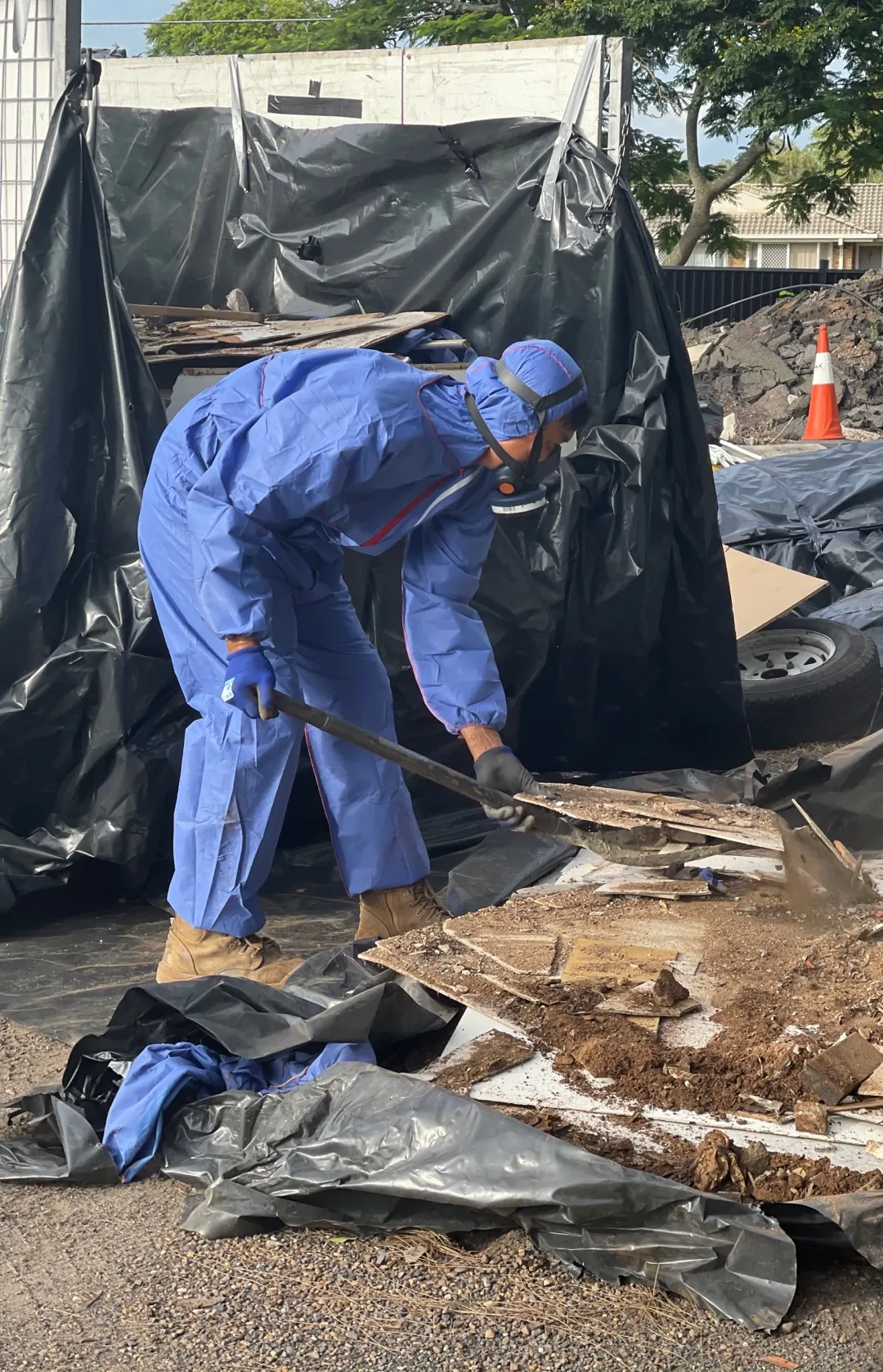
Why renovation is the danger point
Asbestos that’s intact and left alone is relatively low-risk. Renovation is the opposite of leaving it alone — it involves cutting, drilling, sanding, ripping out and demolishing exactly the materials most likely to contain asbestos.
Disturbing those materials can release fibres into the air, where they’re invisible and easily inhaled. One Australian survey found that around 60% of DIY renovators reported being exposed to asbestos during home renovations — usually without realising it at the time. If your home was built or renovated before 1990, you should assume asbestos could be present until testing says otherwise.
The right order of steps
- Assume it’s there, and test first. Before you start, have suspect materials tested. Treat every older space as if it could contain asbestos until confirmed. A professional can sample safely and confirm what you’re dealing with — and a survey tells you the area, amount and type, so you know whether removal is needed.
- Bring in licensed help for removal. A homeowner may remove small amounts of non-friable asbestos (10m² or less) in Queensland, but it’s not recommended unless you’re trained and equipped. Get a licensed, insured contractor to remove asbestos before renovation begins — they take the right precautions and dispose of it legally. Friable asbestos must always go to a licensed removalist.
- Handle anything suspect with caution. Until it’s tested, don’t do anything that could make fibres airborne. Never use angle grinders, drills, sanders, circular saws, high-pressure water blasters or compressed air on suspect material.
- Consider encapsulation where it fits. If the material is sound and won’t be disturbed by the works, sealing it (encapsulation) can be a valid, lower-cost option — common for roofs. It’s best done by an accredited team.
- Dispose of it properly. Asbestos waste can’t go in a normal bin or skip — it must be wrapped, labelled and taken to a landfill licensed to accept asbestos.
The simplest rule
If it’s older and you’re about to disturb it — test before you touch. A pre-renovation check is cheap insurance compared with contaminating your home and exposing your family, your trades and your neighbours.
Still not sure? Just ask.
Call 1300 019 657, 7 days a week, or book an inspection and we'll give you a clear answer.