Electricians and asbestos exposure
Electricians are at particular risk around asbestos because their work takes them into the exact spots where it tends to hide — ceiling spaces, wall cavities, and behind switchboards and meter boards in older buildings.
Why electricians are exposed
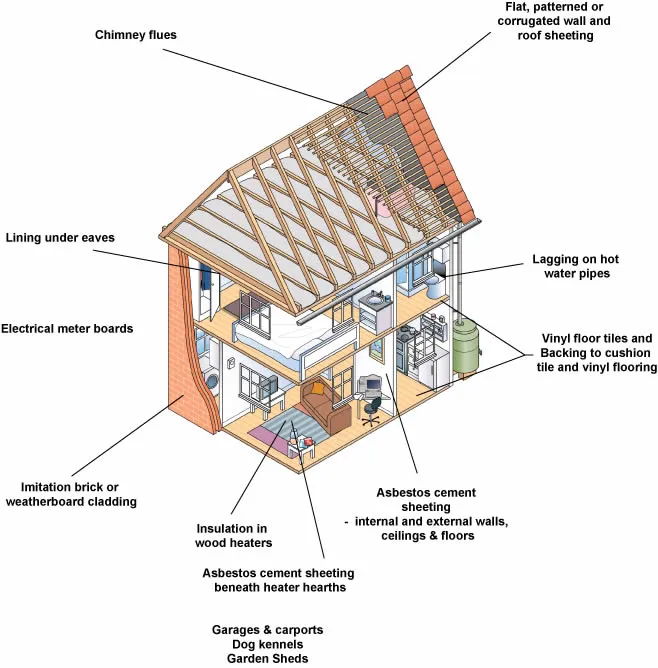
Electrical work in older buildings means getting into ceilings, wall cavities and behind boards — precisely where asbestos was used. As long as asbestos-cement materials are intact, the fibres stay bound in the cement and aren’t readily released. The problem is that electrical work often disturbs them: drilling, cutting or breaking a board can put fibres into the air, and ceiling spaces sprayed with friable material are higher-risk again.
Where you’ll encounter it
In pre-1990 buildings, look out for:
- Meter boards and switchboards — many older boards have asbestos backing.
- Ceiling spaces — including sprayed friable material in some buildings.
- Conduits and boxes made of asbestos cement.
- Pipe lagging around hot-water pipes.
- General asbestos-cement sheeting in walls and ceilings you’re working through.
Working safely
The core principle is: don’t make fibres airborne. In practice:
- Check before you disturb. You can’t identify asbestos by sight — assume suspect boards and sheeting contain it until tested. Consult the building’s asbestos register and management plan before maintenance, refurbishment or demolition.
- Don’t use power tools on it. No angle grinders, drills, sanders or circular saws, and no compressed air or high-pressure water on asbestos-containing material.
- Use the right safe-work method. For non-friable boards, controlled tasks like replacing equipment, operating switches and accessing links can be done with proper procedures. Segregate the area with signage or barrier tape, lay plastic sheeting to catch contamination, and avoid working in wind.
- Clean up properly. Wet-wipe with damp rags for minor dust; where there’s an electrical hazard, use an H-class HEPA vacuum. Bag waste in marked asbestos bags, wet-wipe the outside, and decontaminate yourself in a designated area.
- Wear the right PPE. Disposable coveralls and a P1 or P2 respirator are generally adequate where safe procedures are followed.
When to call a professional
Health monitoring is recommended for workers regularly exposed to ACMs — and for anything beyond a controlled, minor task, the safe move is to have the material tested and, if needed, removed under licence before you continue. If you’ve found something suspect on a job, you can send a sample for testing or have us inspect the property.
Still not sure? Just ask.
Call 1300 019 657, 7 days a week, or book an inspection and we'll give you a clear answer.